
Passivation
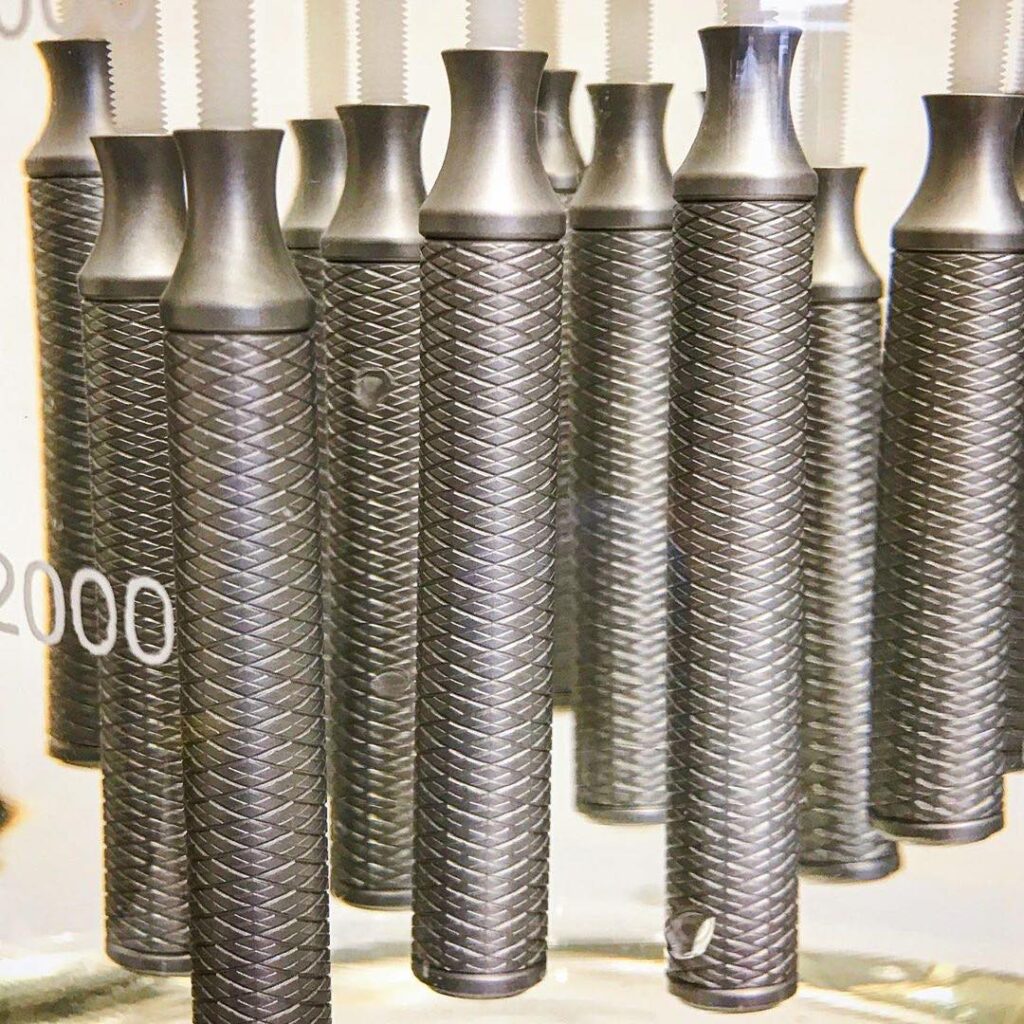
Passivation
Passivation of Stainless Steel is a process which treats the surface of the metal to impede corrosion. The process has two primary functions: first, to remove any free iron on the surface of the material. Second, to promote the growth of nickel and chrome oxides which give stainless steel its excellent corrosion resistant properties. It does not remove discoloration or heat scale from the surface of the part. To remove such material from the surface, one needs to utilize additional methods like acid pickling, alkaline descaling, or mechanical blasting. Many industries use passivation, and it is applicable to a broad spectrum of stainless steel and nickel alloys. It is important to note that improper heat treatment of stainless steel poses a risk of etching the parts during the passivation process.
Our services cater to a wide range of industries, including manufacturing, aerospace, automotive, pharmaceuticals, and more. We can handle passivation projects of stainless steel with any size and complexity, whether you need to remove iron rust for small components or large structures. Our state-of-the-art facilities are equipped with specialized tools and machinery. This enables us to execute our processes with precision and super high efficiency.
Quality Assurance:
Our commitment lies in providing passivation stainless steel process to be of the highest quality. We ensure precision and adherence to industry standards by implementing stringent quality control measures at every step of the passivation process. We conduct thorough inspections to guarantee the integrity and effectiveness of the surface treatment.
Frequently Asked Questions:
Q: What is a passivation process?
A: Passivation is a surface treatment method that removes impurities and creates a protective oxide layer on metal surfaces.
Q: What is passivation process on metal?
A: Passivation process on metal involves treating the metal surface to remove contaminants and enhance corrosion resistance by forming a protective oxide layer.
Q: What chemical is used for passivation?
A: Power Line Metal uses acid-based solutions, such as nitric acid or citric acid, for the passivation process, depending on the metal being treated.
Q: Why is passivation done?
A: Passivation is done to improve corrosion resistance by creating a protective layer that prevents rusting, staining, and other forms of corrosion on metal surfaces.
Q: What is Passivation?
A: Passivation is a surface treatment process that removes impurities and forms a protective oxide layer on metal surfaces, enhancing their resistance to corrosion.
Q: What is the Passivation Process?
A: The passivation process involves cleaning the metal surface and applying a passivating solution to remove impurities and promote the formation of a protective oxide layer. Power Line Metal specializes in providing reliable passivation services to enhance the durability of metal objects.
With our expertise, advanced facilities, and unwavering commitment to quality, we enhance the corrosion resistance and durability of your metal components. So, don’t hesitate to contact us today to discuss your needs. Let us provide you with outstanding results that not only meet but exceed your expectations.