
Tin Plating
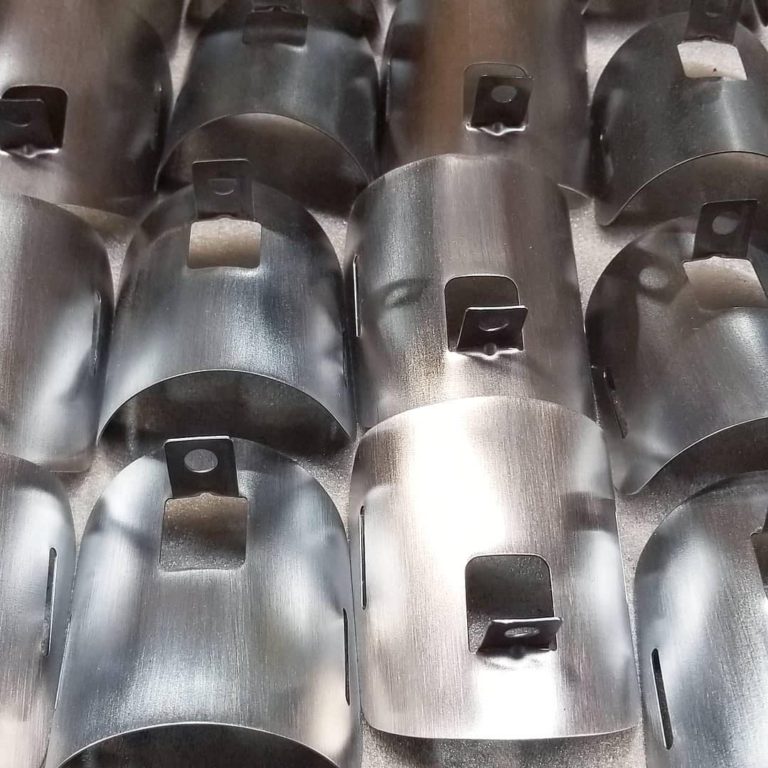
Tin Plating service
Power Line Metal offers tin plating for copper parts. We are one of the leading suppliers for top 5 copper manufacturing companies in the UAE.
Why Tin?
Tin is characterized by significant electrical potential. It is extremely conductive, solder-able, self-lubricating and compatible with food. The surface of tin has multiple functional properties such as corrosion protection, chemical resistance, high ductility and pretty decent layer thickness distribution. Its silver-white appearance makes it an attractive alternative to silver.
Having all of its functional and decorative properties, tin layers can be used in various industrial sectors including electronics and electrical engineering, automotive and food industries, and in mechanical engineering. When combined with other layers, the functional properties of tin layers can be further modified.
Bright Acid Tin Plating Process
Tin plating is an electroplating process which deposits a thin layer of tin on a metal surface. Generally, tin is plated directly on the Copper material without an undercoating. Tin plating is commonly used in corrosion protection and solderability. They are used on copper bus bar to protect the bus bars and to help the solder-ability of copper. Tin deposits are widely used in the production of food processing and shipping equipment (containers). In addition, they are also used in pump parts, automotive pistons, copper & steel wire, plating of electrical components and printed wiring boards. Tin is appealing to the food processing industry as it is a non-toxic, ductile and rather corrosion-resistant metal. The excellent ductility of the metal allows a tin coated base metal sheet to be formed into a variety of shapes without any damage to tin itself.
Advantages of Tin Plating in Dubai
Tin Plating service offers numerous benefits, including optimal surface coverage, corrosion protection, and enhanced electrical conductivity.
One of the key advantages of tin plating is its superior corrosion resistance compared to other metals. The thin layer of tin acts as a protective barrier, shielding the underlying metal from oxidation and environmental factors. This corrosion protection extends the life of the metal part, making it suitable for industries including electronics, automotive, and telecommunications.
Among the different types of electroplating, tin plating also provides excellent solderability, especially when used in tin-lead alloy compositions. The molten tin deposit forms reliable contact surfaces, ensuring good electrical conductivity and strong solder bonds. This makes it an ideal choice for electrical connectors, printed circuit boards, and semiconductor components.
The tin electroplating process, also known as tin electroplating, involves immersing the metal part in a bath containing an electrolyte solution with tin salts. By passing an electric current through the solution, tin ions are deposited onto the surface, forming a thin layer of tin coating. This process ensures an optimal surface coverage and adherence of the tin layer.
In addition to corrosion resistance and solderability, tin coating offers benefits such as an attractive appearance, lubricity, and compatibility with hot-dip processes. The thin layer of tin provides a shiny finish, enhancing the aesthetics of the metal part. The tin plated copper busbars are often preferred. Its lubricity reduces friction and wear, making it suitable for applications where smooth surfaces are desired. Furthermore, tin plating is compatible with hot-dip processes, allowing for the deposition of additional protective coatings or treatments.
In summary, tin plating in dubai is a widely utilized metal finishing process that provides optimal surface coverage, corrosion protection, and enhanced electrical conductivity. With its numerous benefits, including excellent solderability, corrosion resistance, and compatibility with various industries, tin plating is a preferred choice for extending the life and improving the performance of metal components.